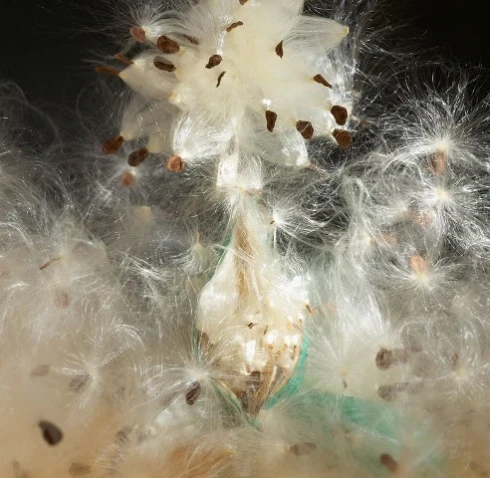
Exuviae (TAG0026)

Exuviae (TAG0026), 2013

Exuviae 2023

Behold the Man: Self-Portraits of Albrecht Dürer & Adamo Macri
by Kenneth Radu. Narrator: Marco Girgenti

After long perusal of Adamo Macri’s fascinating self-portrait entitled Pinus Attis, I have become aware of having seen something similar before. To be sure, this is merely my own casual and arguably eccentric response to the multi-layered meanings of a Macri picture. The artist has produced many images of his face which arouse distinct and varied reactions. Mine is also that of a generally interested viewer and not an art critic.

In the Pinus Attis portrait, Macri evokes the mythological story of Attis, a god of vegetation associated with the mother goddess Cybele, not only through the descriptive title, but also through the sprigs of pine needles and cones arranged in a wheel, almost like a verdant halo or fascinator attached to the side of his head. As in so many of his self-portraits, Macri’s eyes are closed. The palette is one of sombre hues of browns and deep green with highlighted flesh tones of beige, subdued rose and dull gold, colours, if you will, of the forest through which now and then streams of sunlight slip among the trees.

His expression is serene. The face with moustache and signs of a beard betrays nothing in its composure. It may nonetheless be a mask over powerful yet controlled emotions, something viewers may intuit or project into the portrait. I like to think of the expression as containing all I wish to see in it, for that is the particular gift of Macri in his portraits. He allows us to complete the image, as it were, with our own emotions, fantasies and cultural histories, so that his portrait like all great self-portraits also becomes an aspect of our own autobiography.

I keep returning to this particular picture, wondering why it attracts and rivets my attention. I read Catullus’s gripping poem of the story (#63), and even went back to the indispensable Ovid to check out the brief mention of Attis in Book X of The Metamorphoses:

… and the pine which tucks its boughs
up high to form its shaggy crown – the tree
dear to the mother of the gods, Cybele,
if it be true that Attis, for her sake,
shed his own human form, that he might take
the stiff trunk of that pine as his new shape (tr. Mandelbaum).

The salient and harrowing fact of this narrative is the self-emasculation of Attis after which he is associated with or changed into the aromatic pine, having become a sacrificial youth common to pagan and Christian lore. It’s a story of gender transmogrification, of male-female melding and merging into nature and divinity, of blood fertilizing the earth, of erotic complications, of Dionysian revelry. Macri’s portrait with its head decoration and luxurious curls suggests a sexual ambiguity, the facial hair giving the self-portrait its masculine allure even as it subtly incorporates the feminine.

Studying the portrait, I see iconic significance, not only pagan, but also Christian, a facet mentioned by other viewers who sense something more going on besides the picture of a handsome man with a symbolic hat. A startling comparison occurs to me: startling because it comes unbidden, and may either be stretching a point or egregious chutzpah, but clearly the reason for the portrait’s apparent familiarity. The more I study this recent manifestation of a Macri face, the more I recall another distinct image rendered centuries ago and techniques apart. Out of the treasure chest of cultural memories, from the warehouse of images we all carry with us, one other self-portrait presents itself and asks to be looked at again.

Given Macri’s own deep knowledge of art and his predilection to recast elements of the great tradition of portraiture, as well as the mythological Greek stories, into modern relevance, the similarity may not surprise. Whether Macri intends such a comparison is neither here nor there, and we have to be wary of falling into the trap of intentional fallacy. As an innovative multi-media artist, he’d be the first to say that his specific intentions are guides, not absolute definitions, and his titles do not determine the only or final meaning of any work of art. His portraits on Facebook present a fluid oeuvre, ever-changing, and presupposes the participation and explication of viewers, many of whom offer intriguing interpretations and insights of their own, some of which about this particular portrait have stimulated my own thinking. They complete what the artist offers on the basis of what they know or wish or seek.

And so I speak of Albrecht Dürer’s Self-Portrait at Twenty-Eight Years, painted in 1500, the one wherein he is wearing a fur-collared coat and a hand held in front of his chest like a blessing. It doesn’t matter to me if Macri had Dürer’s painting on wood in mind when he created his Pinus Attis portrait. Offering directions and a large field of interpretation, this artist of rich and varied imagination provokes, engages and presents himself in a multiplicity of views which modern technology enables him to do.

Albrecht Dürer Self Portrait Twenty Eight Years

The religious iconography or conventions of Dürer’s portrait are the stuff of art criticism and history, and need not be repeated here. Suffice it to say that most commentators speak of the portrait’s affinities with traditional images of Christ and various aspects of religious art of the early Renaissance. Indeed, given the spray of pine sprigs on the head in Macri’s portrait, one may be forgiven for thinking of a crown of thorns symbolic of suffering, or a wreath of laurel rewarded for victory. His shut eyes are reminiscent of paintings on the theme of Ecco Homo, Caravaggio’s for example, with his close-eyed Christ. My point is simply that Macri’s portrait like Dürer’s, given the adroit handling of pose, colour, light, style, accoutrements and associations, conveys a complex narrative that blends pagan and Christian lore, even as it may arouse humour and point to carnival and play.

In a sense, Macri’s face like Dürer’s is also the picture of calm after great passion or turbulence presented as outward peace, the quiescence that comes with exalted experience or recognition of inexorable truth, the slumber after sensual excess or the inwardness of spiritual meditation. Both portraits present an impassive visage, Dürer’s eyes open but revealing as little and containing as much as Macri’s closed eyes. I am reminded of Emily Dickinson’s superb verse, “After great pain, a formal feeling comes.”

Dürer’s curled hair is similar to Macri’s, and the central cone in the spray of pine sprigs is similar in colour and texture to Dürer’s locks. Brown hues are predominant in both portraits, the background dark. The Christ-like associations are evident in the utter stillness and quasi-mystical aura in both works as well. To be sure, Macri deliberately draws our attention to pagan or pre-Christian motifs in the sexual pun of the title, but adding another dimension to a work does not invalidate the other elements. Unlike Dürer, Macri does not present his hands in any kind of symbolic motion. He appears to be naked, in counter distinction to Dürer’s enfolding robes, and therefore stepping out of his previous self  and exposing a new identity, the nakedness, aside from erotic intimations, a possible metaphor of birth and change.

Pinus Attis

Despite these few parallels, my comparison, however, is not based upon a point-by-point analysis, but on general colour, pose, atmosphere, and mythological suggestiveness. In any case, these observations arise out of admiration for the portrait and not expertise in the art. Given its time, Dürer’s profound portrait also exemplifies the great shift in the early Renaissance to human psychology whereby portraits more and more represent an individual person rather than a generic type.

In our contemporary electronic age, Macri presents many personae in his series of fascinating self-portraits. Set off from the dark with the warmth of complex renderings, the face in both portraits are loaded with narrative and symbolic meaning, whether Christian or pagan or a mingling of both. The emphasis in Macri’s Pinus Attis may be more pagan than Christian, and the reverse may be true in Dürer’s. Each portrait, however, attracts and keeps our gaze because of this multiplicity of significance. Dürer gazes outward, Macri inward; both artists see more than they depict, and through the means of our own gazing, both portraits offer revelations.


Kenneth Radu has published books of fiction, poetry and non-fiction, including The Cost of Living, shortlisted for the Governor General's Award. His collection of stories A Private Performance and his first novel Distant Relations both received the Quebec Writers' Federation Award for best English-language fiction. He is also the author of the novel Flesh and Blood (HarperCollins Canada), Sex in Russia: New & Selected StoriesEarthbound and Net Worth (DC Books Canada).

- - - - - - - - - - - - - - - - - - - - - - - - - - - - - -
"This is one of the most awesome paintings I have seen Adamo."
~ Dick Dakessian

- - - - - - - - - - - - - - - - - - - - - - - - - - - - - -
"A wonderful critical analysis of the masterpiece of Adamo, I agree!"
~ Marco Coraggio (Digital mixed-media artist, Salerno Italy)

- - - - - - - - - - - - - - - - - - - - - - - - - - - - - -
"I have to reflect on Duane Michals, though his photo-real-stories were of a different perspective, you are telling stories as well which have the same reference of face in place/time + space.. mythic and real.

Love it in all it's wonderful many layers of interest and seduction. Good work by both of you! I read Kenneth's article and think he really made a beautiful integrated commentary that I agree with very well. He writes on many layers at the same time, and also brings in the mythology just enough to make it one comment. I enjoyed reading it! 

And, you did inspire me with Pinus a few months ago and encouraged some of the references in this year's project, including Prometheus, Zeus and Ulysses. Yes my friend, you did inspire me at the beginning of the project and it led the way through the project until I introduced Alice in Wonderland characters commingling with the gods.. just keep this baby moving.. I understand where you are coming from much clearer with the Pinus intro. Who knows who will pop up next, but one god usually leads to another and on we go down the yellow brick road to the Oz in all of us, your friend always."
~ John Felice Ceprano (Ottawa rock sculptor, painter)

- - - - - - - - - - - - - - - - - - - - - - - - - - - - - -
"I especially appreciate this translation of Ovid: 
… and the pine which tucks its boughs
up high to form its shaggy crown – the tree
dear to the mother of the gods, Cybele,
if it be true that Attis, for her sake,
shed his own human form, that he might take
the stiff trunk of that pine as his new shape (tr. Mandelbaum).

Rather than Christ, I think of Shakespeare's The Tempest, and Prospero reminding Ariel of how he rescued him (her?): Thou best know'st
What torment I did find thee in; thy groans
Did make wolves howl and penetrate the breasts
Of ever angry bears: it was a torment
To lay upon the damn'd, which Sycorax
Could not again undo: it was mine art,
When I arrived and heard thee, that made gape 
The pine and let thee out. In Julie Taymor's version it appears that Ariel easily transforms from male to female as necessary. And this parallels many remarks already made about the male/female sense inherent in the image.

The moment when Pilate sees Jesus and says, Behold the Man, we understand that the denial of the supernatural is always at odds with the fear that actually the being before us is more than a man, a god in fact. In comparing your portrait to the Durer, there is a similar sense that we can read into the multiple meanings of behold the man: a comment that all men have the capacity for both the feminine and the masculine, but often deny it - your portrait clearly demonstrates this ambiguity. The denial of where the spirit lives or if it lives, is also inherent in your portrait. Hope this makes sense! I have often thought all of your self-portraits suggested the british "green man." And I should say your sensual lips are a mirror image of Durer's - a feminine softness surrounded by that masculine moustache in each case."
~ Jan Kather (American media artist at Elmira College) 

- - - - - - - - - - - - - - - - - - - - - - - - - - - - - -
"Excellent article. It definitely made me curious about the motives or message of the artist when creating that image.. and how far off the mark Kenneth Radu might be in his perception, even though he is clear and generous in his comments. I am not sure I agree that the audience completes what the artist offers- I think the core of the work remains integral. How fluid can it become before losing meaning? And would the piece be more satisfying if we knew the answers to all these questions? In all likelihood- it would not!"
~ Elena Kirschenbaum (Mosaika Art & Design, Journalism Communications Concordia University)

- - - - - - - - - - - - - - - - - - - - - - - - - - - - - -
"You get the detailed analysis your work deserves."
~ Phil Smith (Artist, Live Action, Performance Now, Plymouth UK)

- - - - - - - - - - - - - - - - - - - - - - - - - - - - - -
"I am not a noted critique nor do I know all of the art language like most of you here. I do know how things make me feel and how they touch my heart. I find your picture to be very touching Adamo. I like it very much. It is moving."
~ Deby Callihan (Elementary Education, Oklahoma State University)

- - - - - - - - - - - - - - - - - - - - - - - - - - - - - -
"Adamo, after a second reading, I must admit that this is an outstanding article.. capturing the spirit of your magnificent work. J'adore ta photo.. et c'est une article fantastique! You are one of the GODS of the 21st century. I salute you with lots of love and pride from Florida! I must say you inspire me and many... many others!"
~ Matti Kniva Spencer

- - - - - - - - - - - - - - - - - - - - - - - - - - - - - -
"This is not a bad thing to be alongside Al "Dürer gazes outward, Macri inward; both artists see more than they depict, and through the means of our own gazing, both portraits offer revelations." c'est formidable Adamo!"
~ Don Porcella (Artist, musician, New York City)

- - - - - - - - - - - - - - - - - - - - - - - - - - - - - -
"Adamo, an interesting take on your work. I like the way the writer takes us with him on the journey that your art has inspired."
~ Curtis Craven (Video professional, University of Texas Austin)

- - - - - - - - - - - - - - - - - - - - - - - - - - - - - -
"That was great Adamo! Even when he said that he is not an expert on Art the piece is a profound analysis of your work. I think it shows that what you do is both good and significative. My congratulations and wishes of a further path of creation."
~ Alexander Fredés

- - - - - - - - - - - - - - - - - - - - - - - - - - - - - -
"In ancient Roman mythology Pines were sacred to Attis, the lover of the earth goddess Cybele. An outstanding article with your parallelism in history bringing out the best! Great and unique work. Adamo, this is Awesome!."
~ Gala Dali

- - - - - - - - - - - - - - - - - - - - - - - - - - - - - -
"Adamo, you have a kindred spirit in Kenneth. He understands you as I feel you would wish to be understood (or even misunderstood) yourself, perhaps almost too personally - yes? He recognizes the shaman in you and you complement each other well. It has been said that the entire history of humankind is housed in every single human embryo. It is true. You embrace everything from the primitive to the present and of what is yet to be. You are raw and real.

All fiction is fact as through any misunderstanding are we understood more - yes? Fellini's correct. We are our own eternity. Marcel Marceau once said that in order for him to mime picking a flower, he must become the flower. Where the truth of that flower might be stranger than any piece of fiction, Marceau's "fictionalisation" of it becomes something more true than the already existing fact of it because he has made it more of what it already is. To that, we are all what we create without what we create necessarily being anything or all of who we are.

What we choose has also chosen us - yes? From there, it's merely a matter of aligning the many traits of one's character with the properties of one's craft, which is no mere matter at all, and bringing the thing into being. I'm drawn to life's dichotomies, to reciprocity and all that is happening "in between". As Blake said - to see the world in a grain of sand. That's it - yes? Blessings Adamo."
~ Phillip Wilcher (Australian composer and pianist)

- - - - - - - - - - - - - - - - - - - - - - - - - - - - - -
"It's a great comparison which gives good impulses. Also made me go have a look at Albrecht Dürer - and it's fascinating to find the quiet, subtle, similar things - he was living in a completely different time. Such a holy image from you and Pinus Attis is one of my favourites."
~ Jackie Stella MO (Freischaffende Künstlerin, Friedensaktivistin und Transformerin)

- - - - - - - - - - - - - - - - - - - - - - - - - - - - - -
"As a fan of Adamo for a few years now I find it hard not to be bias. I think Adamo generates so much beauty and life with his pieces. Great comparison visually, I get it, but I feel more energy from Adamo's portrait than from Durer's."
~ Arron Sans (Musician, The Arts University College Bournemouth, London UK)

- - - - - - - - - - - - - - - - - - - - - - - - - - - - - -
"Powerful commentary - great image! A possible metaphor of birth and change."
~ Bill Rabinovitch (Artist, painter, filmmaker, videographer, New York NY)

- - - - - - - - - - - - - - - - - - - - - - - - - - - - - -
"Awesome you could have been a classic model for him, you adapt so well as yourself to the time and place. As you know he was a childhood hero of mine, I admired his work. He is timeless, curious about life. In this piece Adamo you are a time traveler. The pine is an ancient hair product from Gaul, it suits you. When I was young I was a copyest and The Four Horsemen was one of my projects for silk screening."
~ Brad Fahlman (Kootenay School of Art, Victoria BC)

- - - - - - - - - - - - - - - - - - - - - - - - - - - - - -
"Bel article sur une oeuvre qui interpelle et un chef-d'oeuvre qui fascine toujours autant!"
~ Florent Lion (Teacher, Université Paul-Valéry, Montpellier France)

- - - - - - - - - - - - - - - - - - - - - - - - - - - - - -
"This is an astounding article. It really illustrates a portrait of Adamo's mysterious and beautiful artistic way! I love all the layers to Adamo's work. Magnifico! "He allows us to complete the image, as it were, with our own emotions, fantasies and cultural histories, so that his portrait like all great self-portraits also becomes an aspect of our own autobiography".. wonderful!"
~ Jordi Rosen

- - - - - - - - - - - - - - - - - - - - - - - - - - - - - -
"This is a roaring summation of the illustrious portrayal that Adamo has deemed to share from his repertoire of innate creativity. Brilliantly written and really does Damo TRUE JUSTICE!"
~ लॉरेंट रहस्यवादी

- - - - - - - - - - - - - - - - - - - - - - - - - - - - - -
"This was a very interesting article. I particularly loved the various descriptions of your face. I kept waiting for him to mention your lips because, like Mona Lisa, they are most mysterious. Maybe its just me but my attention is drawn to their feminine sensuality."
~ Mick Conway

- - - - - - - - - - - - - - - - - - - - - - - - - - - - - -
"Brilliant and passionate! Bravo - it helped clarify what I found so mesmerizing about your images. Respect!."
~ Anna Van Cutsem Smith (Visual Arts Educator, University of Calgary)

- - - - - - - - - - - - - - - - - - - - - - - - - - - - - -
"Sing the song and join the rite
Praise the day and bless the night
Thank the gods for what they bear
Earth and water, fire and air
Your work is a Pagan masterpiece Adamo. Symbolizing the human's return to nature after a historical long journey running far away from nature under the concept called civilization. Now we wanna get closer to nature again while preserving the built-up wisdom which has been gained throughout the years/ages.. And thank you for Kenneth Radu's elaborate and strong article as well. It was really enjoyable to read."
~ Altug Celik

- - - - - - - - - - - - - - - - - - - - - - - - - - - - - -
"Extraordinary article, on a not less extraordinary self-portrait of an amazing artist. Great parallels Kenneth uses as references, beautiful text. Congratulations!."
~ Teresa Costa (Arte de Reciclar - Teresa Costa, Lisbon Portugal)


Behold the Man: Self-Portraits of Albrecht Dürer & Adamo Macri
Essay by Kenneth Radu2013
Narrator: Marco Girgenti
Stasis Echo of Mount Helicon

Narcissus

"I am reminded of one of my favourite classical myths, the richly symbolic story of Narcissus. This may not be surprising because Macri himself has created an image entitled Narcissus, part of the artist’s botanical interests. To clear away any automatic response, I am not thinking of psychological narcissism, that common pathology of personality. In Macri’s conception, the story goes beyond mere neurosis. It illustrates his fascination with the cellular structure of natural phenomenon, the principles of growth in animal and plant life, and their connection with human life (e.g. Epizoochory among others). As he has mentioned in one of his Facebook comments: “flowers spring up everywhere, sometimes as a main feature of a myth, at times blurring the line between plant and person.” Having rejected the love of the clinging nymph Echo, Narcissus becomes hypnotized by his reflection in a glassy pool, remains fixated, and wastes away from unrequited passion."

Stasis Echo of Mount Helicon, 2013
Photography: Chromogenic C-print

Narcissus, 2013
Photography: Chromogenic C-print
Pinus Attis

Overall 65 x 73 cm

Pinus Attis is featured in the article Adamo Macri: Pushing Language Through the Lens by ArtMuseXpress as well as in the Art Muse Express book.

"In the image, the subject is quiet. Nothing dramatic, no explicit narrative. But there’s weight in the stillness. If you know Attis’s story, you might sense that moment right before—or after—the cut. The pine tree becomes more than just a tree. It’s a container of pain, renewal, ritual. You begin to read the image as sacred, even though it never announces itself that way."
-   -   -   -   -   -   -   -   -   -
"Adamo: you look like a Pagan satyr out of Ovid, very classical, very ancient. You are morphing into a tree: as in the ancient legend of Baucis and Philemon."
~ John Devlin (Visual artist)
-   -   -   -   -   -   -   -   -   -
"Full of tension!"
~ Anton Lechner (Visual artist)
-   -   -   -   -   -   -   -   -   -
"When I look at this image, I smell the scent of pine and also feel the sticky resin that oozes from the cluster of needles. The starburst makes me think more that the man is a humble hero, receiving a laurel wreath, but knowing that fame is short-lived. I also see it as a crown of thorns, suggesting that suffering is part of life, that if we survive, our appreciation of existence is that much sweeter. The power of the image depends on the double reading of the laurel wreath (positive) and the crown of thorns (negative). The reading can veer in many directions (and of course it goes without saying, it depends on the viewers' personal frame of mind). Provocative, as usual, Adamo!"
~ Jan Kather (American media artist at Elmira College) 
-   -   -   -   -   -   -   -   -   -
"His range of head coverings is extensive, and includes often impressive portraits of the regal and the divine. One of my favourite portraits, for example, is the exquisitely subtle Pinus Attis in which the head is partially covered with a cluster of pine needles, attached like a fascinator. Here, the “hat” has pagan, as well as Christian associations, as I have written previously in an essay called Behold the Man."

"Studying the portrait, I see iconic significance, not only pagan, but also Christian, a facet mentioned by other viewers who sense something more going on besides the picture of a handsome man with a symbolic hat. A startling comparison occurs to me: startling because it comes unbidden, and may either be stretching a point or egregious chutzpah, but clearly the reason for the portrait’s apparent familiarity. The more I study this recent manifestation of a Macri face, the more I recall another distinct image rendered centuries ago and techniques apart. Out of the treasure chest of cultural memories, from the warehouse of images we all carry with us, one other self-portrait presents itself and asks to be looked at again."
-   -   -   -   -   -   -   -   -   -


Pinus Attis, 2013
Photography: Chromogenic C-print
41 x 48 cm
Overall: 65 x 73 x 8 cm

TO BE A MAN: “UNTITLED MALE ID” AT THE LONDON ANGUS-HUGHES GALLERY FEATURING ADAMO MACRÍ 

It will be opened on the 12th April 2013 in London at the Angus-Hughes Gallery “Untitled male ID”, exhibition – running through 12th May 2013 -, curated by William Angus-Hughes which explores the concept of being male, its meaning, often considered in adversarial terms  and which finds a context in a society focusend on emphasizing the differences between the genders – male, female as well as the gender neutral individuals – instead of enhancing the similarities, promoting a dialectic under the sign of freedom, which goes beyond gender and encourages dialogue, empathy and sharing.


Here it will be showcased the work of many artists – Lisa Ivory, Fred Lindberg, Zachari Logan, Lee Maelzer, Jonathan McLeod, Melanie Manchot, Minou Norouzi, Robert Siegelman, Matthew Stradling – as Adamo Macrì. This brilliant – Montreal based – artist works with photography, video, painting, drawing and sculpture, exploring themes connected to the human condition as identity, nature, contamination, simulating in his creative process the act of food making and putting together disparate elements that evoke mysterious and sensual, surreal suggestions. A not to be missed happening to enjoy his work and discover new artistic languages of contemporary times.

ESSERE UN UOMO: “UNTITLED MALE ID” ALLA ANGUS-HUGHES GALLERY DI LONDRA CON ADAMO MACRÍ

Sarà inaugurata il 12 aprile 2013 a Londra presso la Angus-Hughes Gallery “Untitled male ID”, mostra – che prosegue fino al 12 maggio 2013 -, curata da William Angus-Hughes che esplora il concetto di essere uomo, il suo significato, sovente considerato in termini conflittuali e che trova un contesto in una società dedita a enfatizzare le differenze tra i gender – maschile, femminile come anche gli individui neutrali al gender – invece di valorizzare le somiglianze, promuovendo una dialettica all’ insegna della libertà che va al di là del gender, incentiva il dialogo, l’ empatia e la condivisione.

Ivi saranno esposte le opere di plurimi artisti – Lisa Ivory, Fred Lindberg, Zachari Logan, Lee Maelzer, Jonathan McLeod, Melanie Manchot, Minou Norouzi, Robert Siegelman, Matthew Stradling – quali Adamo Macrì. Questo brillante artista – che risiede a Montreal – lavora con la fotografia, il video, la pittura, il disegno e la scultura, esplorando tematiche connesse alla condizione umana, quali l’ identità, la natura, contaminazione, simulando nel suo processo creativo l’ atto della preparazione del cibo e fondendo tra di loro diversi elementi che evocano misteriose e sensuali, suggestioni surreali. Un evento imperdibile per apprezzare la sua opera e scoprire nuovi linguaggi artistici della contemporaneità.


To Be A Man: “UNTITLED MALE ID” at the London Angus-Hughes Gallery featuring Adamo Macri


To Be A Man
Published April 11, 2013
Fashion Beyond Fashion

Untitled Male ID

Angus-Hughes Gallery
26 Lower Clapton Road
London, United Kingdom

April 12 - May 12, 2013

Featured Artists:
Adamo Macri, Fred Lindberg, Jonathan McLeod
Lee Maelzer, Lisa Ivory, Matthew Stradling
Melanie Manchot, Minou Norouzi
Robert Siegelman, Zachari Logan

Exhibition 2013
Curated by William Angus-Hughes
Artfacts

Art of the Orifice: Adamo Macri’s Verboten
by Kenneth Radu


The human body has always been the source of pleasure and revulsion, at once the embodiment of ecstasy and excrement, delight and disgust, beauty and brutality, dream and nightmare. In his great satire Gulliver’s Travels Jonathan Swift depends upon such antithesis in his portrayal of the admirable Houyhnhnms and Gulliver’s ensuing misanthropy. After experiencing the social harmony and sense of rational creatures, he is critical of human standards and behaviours, just as he elsewhere is revolted by the physical body itself whose imperfections are magnified in the land of the giant Brobdingnags. 

Adamo Macri is no disillusioned Gulliver when it comes to the human body, nor does he recoil from its most intimate parts. Like Swift he magnifies, not necessarily the pores and blemishes, but the secret and forbidden interiors, rarely seen in works of art, or outside of a hospital operating room or dentist’s office. In fact, one has to admire the dexterity and aesthetic complexity of his photographs of human orifices in a stunning montage entitled Verboten. If this work unlike Swift’s lacks a political and social context, it is nonetheless rich with erotic and psychological implications which viewers who study the pictures apprehend and may explore, once they overcome initial titillation or shock.

A special quality of Macri’s oeuvre here is that he renders the potentially shocking, revolting, lascivious or shameful into a thing of seductive beauty. The method involves exposure of physiological essentials, the openings at either end of the body, through intent, hue, magnification, texture, explicitness, suggestiveness, and amoral distancing. The latter is itself a kind of objectivity allowing the artist to show the inside of the open mouth, the vulva, and ultimately the anus without Gulliver’s disillusionment, disgust and reprobation. Perhaps objectivity is incorrect. The orifices, those apertures by which we absorb and expel, demonstrate Macri’s unflinching acceptance of and fascination with unseen characteristics of the top and the bottom of the torso. He invites a viewer’s admiration or rejection, delight or distaste, erotic reverie or recoil, or a combination of all contradictory responses.

Human portraiture understandably pays attention to the face, as Macri himself does in his series of self-portraits on Facebook, or on the external body, including genitalia. Rarely does it focus so pointedly and penetrate the most hidden and most potentially disturbing parts of the human form: the inner recesses of the mouth, the vulva beyond the labia, and the open and closed anus. His eye delves into the secret nature and depths of the orifices like a diver plunging underwater to discover the brilliant coloration and complex structure of coral and shells and exotic organisms not visible on the surface. 

Consisting of six photographs in three rows, Verboten as a title is ironic. As we all know, it’s the German word often used in English to denote the off-limits and forbidden, as if the sound itself were a gunshot warning us to stay away from what should be properly hidden or exclusively private. I say ironic because anything labelled verboten immediately entices one to enter, to transgress, to see what one is not supposed to see, to violate the taboo, and break boundaries. In their response to this series, viewers have occasionally read verbatim for verboten. If I may allude to Freud, his theory of parapraxis argues that a minor slip of the tongue, or confusion of words, supposedly reveals a hitherto unrecognized, unconscious truth. 

In Macri’s Verboten the truth is the implicit connection this innovative, multi-media artist makes between word and image, and literal representation and poetic transformation. The images are of the inward, physical nature of orifices, ordinarily verboten to public view. The montage imbues them with multiple meanings or possibilities originating not only in the artist’s own conception, but also in a viewer’s complex and perhaps contradictory responses. These can lead to slips of the tongue in more ways than one, given the subject matter of the photographs, and one doesn’t really have to accept Freudian theory, although it is convenient here. To the artist we grant the right to explore everything that is hidden, nothing is forbidden, nor has it ever been, moral or political censorship notwithstanding, if we look at the history of art in all its manifestations. 

Intentionally or not, Macri encourages any viewer’s confusion of the two words in these simultaneously attractive and repellent photographs. If we only praise or censure the photographs for their explicitness, perhaps we are being literal-minded, trapped by exactitude, the verbatim. Macri depicts this same exactitude visually and in so doing ironically liberates the hidden parts from physiological fact. The slip of the tongue may well indicate a conflict of our perception. We actually see the facts of the orifices, as it were, but we may also be seeing what the artist suspects we will see: that is to say, our own overt or unconscious feelings and/or desires about them. An artist of wide-ranging intelligence, Adamo Macri understands how the visually verboten has the inestimable power to break the chains of the factual or verbatim.

Verboten

The photographs also give voice to other forbidden words which still bring a blush to the modest or puritan cheek. True, what once were forbidden words have lost their ability to shock because of overuse, just as the body risks becoming banal because of over-exposure. I commend the tact and control by which Macri exposes the loveliness of the hidden. His method of artistic exactitude saves the orifices from banality and boredom as the pictures so clearly enter the realm of the transfigured and paradoxically edifying. 

The first image, top left of the montage, is black and white. It shows the interior of a wide-open mouth, and one can see teeth. It appears forbidding or ominous, as if it is more warning than entrance, almost serving the function of a guillotine, one threatening to clamp down and decapitate intruders. Perhaps it’s Macri’s Italian ancestry or admittedly my own literary predilections, but while studying this particular picture, a line from Dante came to me unbidden from my university days: Lasciate ogni speranza voi ch’entrate. Unlike the poet confronting the gates of Hell in The Divine Comedy, we dare to enter the forbidden, the verboten, not abandoning all hope, but challenging our own inhibitions. The reward is neither sin nor hell, but wonder at Macri’s artistic purpose and vision.  
              
Once we get past the brutal exactness of the first black and white photograph, in the second frame we proceed further into the mouth, to the uvula, and discover the inner nature of things, the beginning of descent or exploration of the unperceived depths. Our eyes are ablaze with brilliant colour of the uvula and opening to the throat, a striking contrast with the first image of the open mouth, the external gate or guard. 

In the second row of six photographs depicting the vulva, some of the images reflect Macri’s endless fascination with cellular structures, the potential and process of the building blocks and energies of organic life. They also show his ability to create images that stimulate other images pre-existent in the viewer’s mind. We make analogies to explain what we see, analogies arising from what knowledge we already possess. It could be a honeycomb to describe the structure presented in the last picture of this row. The lacy fringes of a gown, or an elaborately embroidered fan, or even a segment of living coral comes to mind when I view the fifth picture. Another photograph has similarities to a stained-glass rose window in a Gothic cathedral; one or two remind me of the delicate tissue inside a clam. We all seek comparisons. The pictures entice one to feel, for most seem soft and tactile, pliant to the touch and enfolding. 

The pictures may intermingle with our private thoughts, if we do not turn away. It remains for us to enter the openings how we will, and to feel what we feel, as we dare to sink into further depths of the hidden. Our own erotic fantasies are stimulated by the photographs, and we project on to them what we wish to imagine. Macri’s art is always interesting in that regard. What he leaves out in a particular series is often as compelling as what he depicts. To some degree, the erotic in art is not so much what artists show in a work, as it is what dreams viewers dream into them. Or not, as the case may be. Some viewers look away in dismay or shock or distaste, rather than entertain and immerse themselves in the implications. Or, more likely, they return after the first experience to re-examine, compelled by the fascination of the unfamiliar which everyone possesses.

The tension between acceptance and revulsion, therefore, is often present in Macri’s work, sometimes the line so fine it’s difficult to perceive, except one feels that it is so. Many experience this conflict or contradiction, for example, when viewing his pink tongue-like structure in a series known as Still Life. Accept or invite what? Macri does not portray what can penetrate the human apertures, except in one stunning image in the bottom row of the montage. It is a photograph of a large black dildo inserted in the anus, or attempting to enter, its passage seemingly forbidden. Its presence is so startling that one is compelled to consider that however much it opens, a human orifice can also close and prevent access. The gates may be shut against unwanted access or trespassers, the teeth may bite down, and it is up to the sexual imagination of viewers to complete the narrative. 

The first and rather humorous photograph of the anus in the bottom row looks like a pillow with a button sewn in the centre. The intensity of the images increases, becoming more provocative and evocative. The montage ends on a note of negation. Just as the first black and white picture of the mouth has a forbidding quality, so the last image, the sixth, extreme right of the third row, instils the same negative feelings, primarily because we have gone from the open to the sealed, from inclusion to exclusion. It is a blatant black and white, accurate photograph of a closed anus, the bottom of the torso, the aperture of expulsion, not a shred of romance or idealization about it. 

Between the opening of the mouth in the first photograph and the closing of the anus in the last, however, the striking emphasis on the colour pink in the pictures softens the visual and/or rhetorical blow of Verboten. Pink hues elevate the clinical or literal verbatim to the level of aesthetic excitement and erotic fantasy of the verboten. Hence, Macri liberates the orifices from mere clinical physiology, prurience or pornography. Pink is the colour of warmth and innocence and new life. Moreover, pink underlines Macri’s sense of humour, for he is an artist who, showing hidden body parts, often has his tongue in cheek. His art can be serious and satirical at the same time. There’s a spirit of joie de vivre in the pink or, to use Bakhtin’s famous concept, a carnivalesque subversion of standard narratives, whereby Macri daringly intermingles the sacred and the profane, the clinical and the aesthetic, upsetting preconceptions and seducing the imagination. 

After all, the social function of carnival, the public festival of intimate audacity, is to turn things upside down, to liberate repressed feelings, and sabotage the entire notion of the verboten. In these pictures the colour pink, however clinically true to the viscera or inner parts of the human, also romanticizes or idealizes the orifices, their hidden depths, and even their narrow physiological function, to a degree. Despite the final black and white photograph of anal closure, Macri’s photographic montage Verboten is not a portfolio of Swiftian disgust. In these pictures of the inside of our complex orifices, he subtly photographs the dynamic between acceptance and denial, fascination and revulsion, reality and fantasy, the conscious and unconscious. Above all Macri transforms our complex and sensual orifices into an art of erotic suggestiveness and sensuous beauty.


Kenneth Radu has published books of fiction, poetry and non-fiction, including The Cost of Living, shortlisted for the Governor General's Award. His collection of stories A Private Performance and his first novel Distant Relations both received the Quebec Writers' Federation Award for best English-language fiction. He is also the author of the novel Flesh and Blood (HarperCollins Canada), Sex in Russia: New & Selected StoriesEarthbound and Net Worth (DC Books Canada).

Art of the Orifice: Adamo Macri’s Verboten
Essay by Kenneth Radu2012